While everyone is concentrating on fitness and gear, what you eat and drink on the Everest Base Camp Trek is also equally important. Eating right is the key to doing well at altitude. Whether you’re preparing for your first Everest Base Camp Tour or thinking of an EBC Trekking package, this survival guide will ensure you’re well-fed, well-hydrated, and well-adrenalized from Lukla to the base of the world’s highest mountain.
Knowledge of the Nutritional Requirements at High Altitude
As you climb higher up to Mount Everest Base Camp Tour, your body strains increasingly harder to operate off less oxygen. You consume greater energy and dehydrate more quickly. In case you’re not consuming or drinking sufficient, you’ll experience vulnerability, dizziness, and you’ll risk altitude sickness.
Meals in the teahouses (the lodges where you devour and sleep on the way to base camp) are generally included in most Everest Base Camp Trek packages, serving up the carb-heavy, vegetarian-friendly dishes designed to fuel trekkers. What you eat and drink at altitude could make a huge difference in the way you feel and the way secure you’re.
The fine foods to eat at the Everest Base Camp Trek
Dal Bhat Power 24-Hour
If there may be one food to consume at the Everest Base Camp Trek, this is it, and for a good reason. This traditional Nepali meal consists of rice, lentil soup, curried veggies, and, every so often, pickles. It’s far to be carried at any prevent along the trek and is the most calorically dense meal for a trekker. The complex carbs are easy to digest and can be refilled as often as desired, which depleted trekkers appreciate since they burn several thousand calories a day.
Carbs are Your Best Friend
The high altitude reduces your body’s available pathways to metabolize energy: fats and proteins are inefficient resources, so carbs become primary. Fried rice, pasta, pancakes, noodles, potatoes, and flatbreads such as chapati and Tibetan bread are the first-class alternatives due to the fact that he teahouse kitchens prepare them sparkling and feature them ready while you order. Even though many Everest Base Camp Trek itineraries advocate extra frequent but lighter food to prevent mountain illness, they advise consuming plenty of food with the right nutrition.
Stick to Vegetarian
Although the Everest Base Camp Tour serves meat before getting to Namche Bazaar, they are not recommended afterward. This is because there is no refrigeration above the city’s altitude, making meat dish storage impossible. That’s not to say the cooks can stockpile enough meat for a supply. Food poisoning is a grave situation at that height, which makes vegetarianism the safest despite being vertical. There is nothing better than vegetarians in high elevations.
Energy-Boosting Snacks
Your EBC Trek Cost will cover main meals, but your snacks and alcohol are not included in that plan. The best snacks to carry high energy and lightweights include energy bars, trail mix, peanut butter, granola, dark chocolates, and electrolyte tablets. Eat that snack in your snack stop quickly and avoid exhaustion before arriving at the teahouse.
What to Drink to Be Healthy Inside and Out
Hydration is Everything
The hardest thing about the whole Everest base camp trek is drinking water. Altitude sickness is due in part to dehydration. At higher altitudes, your body dehydrates from the air that you breathe and sweat, even when it’s cold. You should aim to drink 3 to 4 liters of water per day, taken at regular intervals during the day.
Boiled or filtered drinking water is provided at teahouses with most packages for the Everest Base Camp. There is bottled water, but it gets expensive and contributes to the plastic waste — not ideal in the fragile Himalayan ecosystem.
Safe Water Practices
continually purify your water. Nevertheless, even supposing it’s far boiled, it’s sensible to use water purification tablets, UV pens (along with SteriPEN), or transportable filters to stay safe. Waterborne organisms can result in serious illness and can waste your Everest Base Camp trek.
Avoid Alcohol and Caffeine (Mostly)
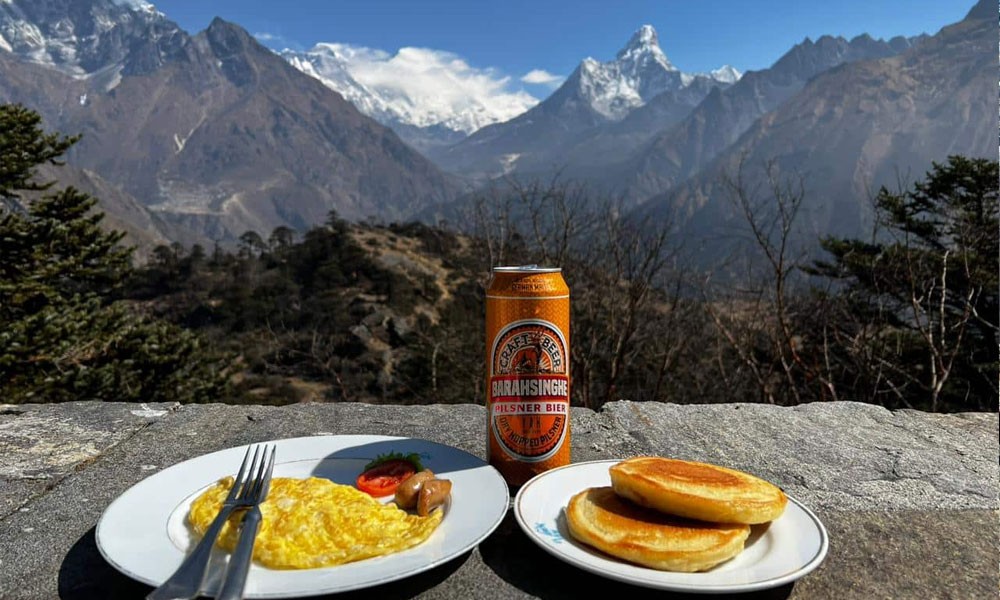
You may get to the base camp of Mount Everest and want to celebrate with a beer, but alcohol and caffeine are best in small doses at altitude. Both are diuretics and can result in dehydration. A few trekkers will have little coffee or tea, but this will be compensated with extra water.
Warm herbal teas such as ginger, lemon, or garlic soup (a trail favorite) are better alternatives that will soothe the stomach and offer trace nutrients.
Food and Drink in Your Everest Base Camp Trek Itinerary
Your Everest Base Camp Trek plan will revolve around 12–14 days, as per your speed and acclimatization time. Here’s a massive concept of the way to cope with food and hydration in the direction:
- Days 1–3 (Lukla to Namche): Eat a wholesome diet and drink lots of fluids to help with your ascent to altitude. Keep away from alcohol. Deliver some snacks to consume even as you hike.
- Day four–7 (Namche to Dingboche): Your appetite can begin to wane. If you may, keep on with clean-to-digest carbs and steer in the direction of hot liquids. Consumes small meals greater frequently.
- Days 8–10 (Dingboche to Gorak Shep and EBC): You’ll be hiking at a few extreme elevationsAppetitete can be low, so percent high-energy snacks and drink more than usual. A warm soup-type feed can be ideal in most cases.
The flight home: Keep drinking and eating well. Your body still needs fuel energy for the descent, even if the trekking is technically easier.
Saving Money on Food and Drink in Your EBC Trek Budget
Most meals are included as part of an Everest Base Camp Trek package, but extras such as snacks, bottled drinks, and desserts aren’t. Prices increase as you ascend. You may be charged NPR 50 at Lukla, but it will cost NPR 400 from near EBC. Allow from $10-15USD per day for added extras you do not receive in your package.
Add-ons: These are things you should account for when calculating the cost to climb Everest Base Camp. They are what can turn the difference between a drudgery survival trip and a lovely, comfortable journey.
Last Bits on Eating & Drinking on the Everest Base Camp Trek: listen to your body: if you lose interest in or grow nauseated by food, turn to soups and fluids.
Eat while you’re not hungry: Your body nonetheless wishes fuel to acclimate and flow.
Don’t experiment with new ingredients at altitude: devour simple, acquainted food.
Tune your urine color: If it’s clean or light yellow, you are nicely hydrated.
Conclusion
eating and ingesting properly at the Everest Base Camp Trek isn’t a comfort — it’s a life-and-death recreation plan. By eating and drinking well, and training smartly, you give yourself the best possible chance of arriving at Mount Everest Base Camp strong, healthy, and proud.
Whether you pick a luxury Everest Base Camp Trek package or decide to trek EBC with a cheap price, your EBC Trek food plan can play a positive or negative role in your hiking. Keep in mind — An EBC Trek Cost has more than just a price tag, it’s an investment in your health, endurance & passion.
So pack your snacks, down your water, and hike smart. The Himalayas are calling — and now you know exactly what to feed them for the trip.
About the Author